
At a glance
- In 2024, 2.77 in every 100 insured motorcycles had a third-party claim, against 7.55 in every 100 cars. The average claim cost €1,3921.
- From these figures, the market average for third-party liability on a motorcycle is about €114 a year before tax, against €147 for a car12. No public figure exists by engine size.
- The minimum limit of the compulsory cover is €1,300,000 per victim for bodily injury and €1,300,000 per accident for material damage, since 1 January 20223. It applies to the moped too.
- On top of the net premium come the 15% premium tax4 and a levy of 1.8% of the liability premium for the Auxiliary Fund (Επικουρικό Κεφάλαιο)5.
- The e-scooter must be insured under Law 5322/2026: third-party liability of at least €50,000, a €250 fine without it, riding from age 17. A home policy almost always excludes it.
- Some insurers print bicycle prices: Minetta from €18.50 a year6, Interlife from €2.08 a month for bicycles and e-scooters7.
The point
The word “two-wheeler” hides four very different vehicles, and the law treats each one differently. The motorcycle and the moped carry a number plate and must be insured (Presidential Decree 237/1986 art. 2). The e-scooter has no plate, but since 2026 it has its own compulsory third-party liability insurance. The bicycle has neither, and yet its rider owes exactly the same money if they knock down a pedestrian. This guide puts all four in order: what you pay, what you buy, where the company says no, and where the law is on its side. It is for anyone with a motorbike parked under the block of flats, a moped for work, an e-scooter for the metro or a bicycle for the ride to the office.
Four vehicles, four rules
The law does not ask how many wheels your vehicle has. It asks whether it has an engine, how fast it goes and whether it took a number plate. These three answers decide whether you must insure it, what licence it needs and where it may be ridden.
The moped is the two-wheeler up to 50 cc that does not exceed 45 km/h by design. It takes a plate, needs an AM licence from age 16, and must be insured. The same holds for the 45 km/h electric moped, however much it looks like an e-scooter to the neighbour.
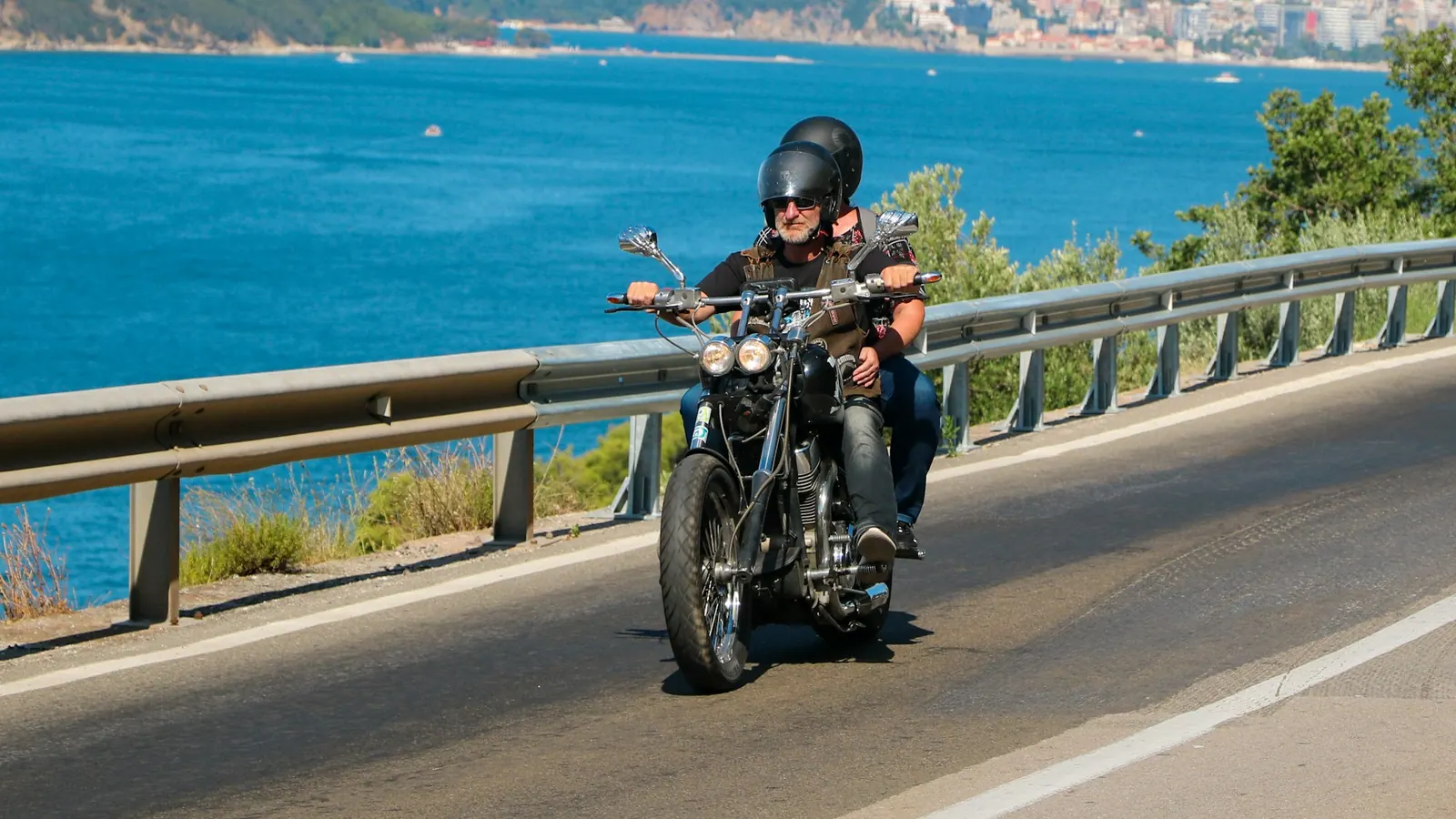
The motorcycle is anything beyond those limits, from a 125 cc scooter to a 1,000 cc touring bike. A plate, an A1, A2 or A licence depending on power, compulsory insurance, the roadworthiness test (ΚΤΕΟ). Here the price moves a lot, because it depends on the engine size and on where the bike is kept at night.
The e-scooter entered the Highway Code with Law 4784/20218, under the name Light Personal Electric Vehicle (Ε.Π.Η.Ο.). It takes no plate and needs no licence. Since Law 5322/2026 (art. 78), however, it needs third-party liability insurance with a limit of at least €50,000, and a rider who has turned 17. Without insurance, the fine is €250.
The bicycle is not even a motor vehicle, and an e-bike with assistance up to 25 km/h stays a bicycle in law. Above that, the assistance makes it a moped, with everything that follows.
The practical consequence is a single one, and it is worth remembering. Where there is a plate or an e-scooter, there is a policy, and a fine if it is missing. Where there is not, as with the bicycle, there is liability without a policy. That is worse, because you pay out of your own pocket.
What you buy with the compulsory cover of a two-wheeler
Compulsory insurance covers the damage you do to someone else. Nothing more. If you fall on your own in a bend and break the bike and your leg, the compulsory cover pays not a single euro. If you hit the car next to you or injure a pedestrian, it pays them.
The limits are the same as for a car: €1,300,000 per victim for bodily injury and €1,300,000 per accident for material damage. The moped you bought for €900 carries the same guarantee as the luxury car. That is also why the premium does not fall below a certain point, however cheap the vehicle.
On top of this, companies hang small covers that you already find in the basic package. The most common is accident care: a person comes to the scene, takes photographs, fills in the report and, if needed, loads the bike onto a truck. The second is cover against an uninsured vehicle, which pays for your own material damage if someone without a policy hits you. The limit here varies widely by company, from €15,0009 to €100,00010 in the matching car programmes, and on two-wheelers it is often lower.
The third is personal accident cover for the rider, a sum paid on death or permanent disability and, in some packages, hospital costs. On two-wheelers this cover matters far more than in a car, because the rider has no metal around them. Hellas Direct, for example, sells it as an extra on a motorcycle policy: €50,000 on death or permanent total disability, for €3 a month11.
The optional covers, one by one
Above the compulsory cover, the market sells a shorter menu than for cars. Few companies write two-wheelers with full cover, and those that do set limits.
Theft is the cover that almost everyone asks for and the fewest get. A motorbike is stolen far more easily than a car: two people lift it into a van in forty seconds. Companies answer with conditions: a minimum vehicle value, a specific lock, parking in a closed space at night, an alarm or a tracker on expensive bikes.
Fire is cheap and almost always sold together with theft, as a pair. Natural events cover hail, flood and a fallen tree, and make sense mainly for a bike that is kept outside at night.
Own damage, that is comprehensive cover, pays for the damage to your own bike when you are at fault. It is by far the most expensive cover for a two-wheeler, because a simple tip-over at a standstill breaks a mirror, a lever, the plastic panels and the exhaust.
Legal protection pays a lawyer when you disagree about who is at fault. On two-wheelers this happens more often than anywhere else, because the car driver almost always says “I did not see him, he came out of nowhere”. In 2024 its average premium was €7.04 a policy across the market, and 96.6% of it was sold as an extra on a vehicle policy12. It is one of the few covers that are almost always worth the money.
Roadside assistance for a two-wheeler is a separate product with its own price, because moving a motorbike needs a special platform. Finally, equipment cover for the helmet and riding gear exists in few packages and with small limits.
What moves the price
Four things decide the premium of a two-wheeler, and two of them weigh far more than the rest.
Engine size. Insurers ask for it, and each one prices it in its own bands. Those bands are not published, and the ΕΑΕΕ yearbook does not split motorcycle claims by engine size1. The logic is not the engine itself but the speed of the vehicle and the severity of the injury that follows. If you are choosing between two bikes, ask for a quote on both.
The area. ΕΑΕΕ publishes claims by prefecture for all vehicles together. In 2024 Attica had 8.69 third-party claims per 100 insured vehicles, Thessaloniki 6.85 and the Cyclades 4.51, against 6.87 for the country1. The comparison of this site multiplies the market average by a zone factor drawn from these figures2. Insurers use zones of their own.
The age and licence of the rider. Insurers ask both, and a young rider or a new licence usually costs more. How much, each insurer decides from its own data, which it does not publish. The yearbook gives no split by age1.
The claims record. The bonus-malus system works on two-wheelers too. Clean years bring a discount and an at-fault claim raises the price. The size of each step is in the terms of each insurer.
Two things that many people think count, and that count less: the age of the bike, which matters only for the optional covers, and the brand. Companies price the engine size and the zone, not the name on the tank.
Where to go from here
All this holds for every two-wheeler. The articles below take up the questions that two-wheelers share with cars: what third-party liability covers, quarterly or annual payment, a crash with an uninsured driver, and the green card for a trip abroad. For a price, open the comparison for motorcycle insurance, or for the e-scooter and the bicycle.
Frequently asked questions
Which two-wheelers must be insured?
Those with a number plate. A moped, a motorcycle, an electric two-wheeler that goes faster than 25 km/h, a three-wheeler, a quad. The e-scooter has no plate, but since Law 5322/2026 it needs its own third-party liability insurance, with a limit of at least €50,000. The bicycle carries no obligation, but you still owe the money if you hit someone.
How much does motorcycle insurance cost in 2026?
There is no public price by engine size. The public figure is the market average from the motor yearbook of ΕΑΕΕ, the Hellenic Association of Insurance Companies: in 2024 third-party liability for a motorcycle came to about €114 a year before tax. The 15% premium tax and a 1.8% levy for the Auxiliary Fund come on top. Ask for quotes with your own details.
Is my e-scooter covered by my home insurance?
Almost never. Most home policies cover your liability as a private person, but expressly exclude damage caused by a motor vehicle. An e-scooter is a motor vehicle, and the law requires a policy or a certificate with its serial number. Ask your insurer for a written answer before you rely on it.
Is comprehensive cover worth it on a motorcycle?
Rarely, and fewer companies offer it than you think. In the ΕΑΕΕ figures for 2024, the market average for own damage on a motorcycle was about €369 a year before tax, against €131 for a car, because one fall breaks half the plastic panels. On a cheap bike the sums do not add up.
Is my helmet covered if it breaks in an accident?
Not by the compulsory cover, because that pays only for the damage you do to someone else. A few packages give a small cover for the helmet and riding gear, with its own limit, and only together with a reported accident. Ask about equipment cover before you sign.
What happens if the rider is not the owner?
The compulsory cover follows the vehicle, so the victim is compensated in any case. The company, however, can turn to you if the rider did not hold the right licence or if the policy names specific riders. Declare who rides, especially a young rider.
Does Thessaloniki pay as much as Athens?
The public figures do not say so for motorcycles. ΕΑΕΕ gives claims by prefecture for all vehicles together: in 2024 there were 8.69 third-party claims per 100 insured vehicles in Attica and 6.85 in Thessaloniki, against 6.87 for the whole country. Each insurer turns this into its own zones.
Can I insure my motorbike for the summer only?
Often yes, with a shorter policy. Ask the insurer which terms it sells. Watch two things. A shorter term often costs more per month. And a bike without insurance that stands on a street or in the open parking under a block of flats counts as uninsured and is fined.
Sources
- ↑Hellenic Association of Insurance Companies (ΕΑΕΕ), Statistical Yearbook of Motor Insurance 2024, tables 3A, 3B, 6 and 7A, November 2025
- ↑How the comparison works: where every number comes from, October 2026
- ↑Law 5113/2024 (Government Gazette A 96/21.06.2024), article 5: the minimum amounts of compulsory motor cover, 2024
- ↑Law 5177/2025 (Government Gazette A 21/14.02.2025), Code of Indirect Taxes, article 43: the premium tax, 2025
- ↑Presidential Decree 237/1986, article 20, as replaced by article 14 of Law 5113/2024: the levy for the Auxiliary Fund, 2024
- ↑Minetta (Μινέττα), bicycle insurance Bike 1 and Bike 2, 12 October 2026
- ↑Interlife, bicycle and e-scooter insurance BIKE Simple and Safe BIKE, 12 October 2026
- ↑Law 4784/2021 on micromobility and Light Personal Electric Vehicles, 2021, as in force
- ↑Hellas Direct, insurance product information document, Cars, March 2025
- ↑Allianz, IPID My Motor Value, January 2025
- ↑Hellas Direct, personal accident cover for the motorcycle rider, 12 October 2026
- ↑ΕΑΕΕ, Legal expenses insurance 2024 (Ασφάλιση Νομικής Προστασίας 2024), table 1, 2025